The Lowlands
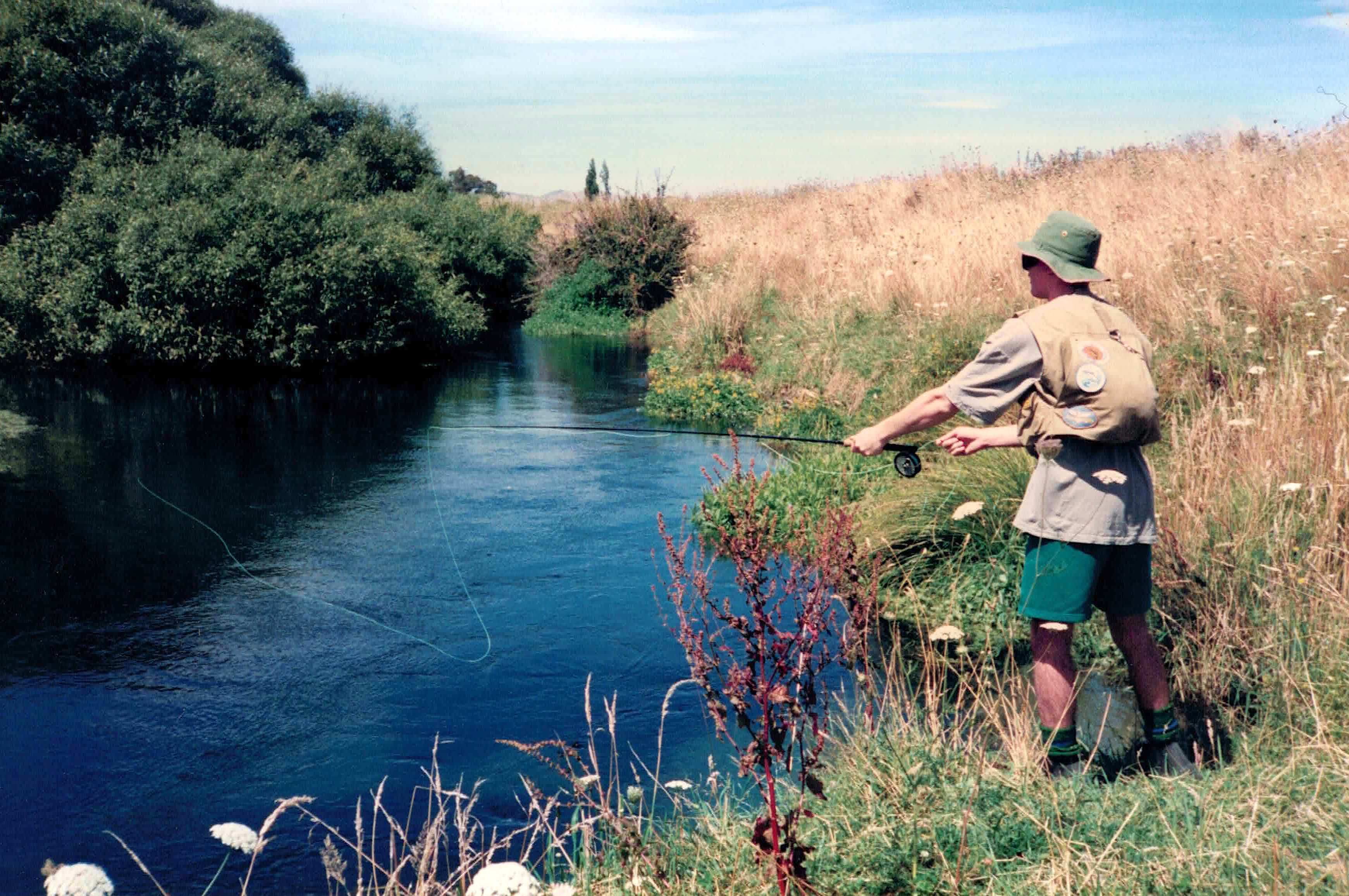
My Kilwell 8'6" in Orange

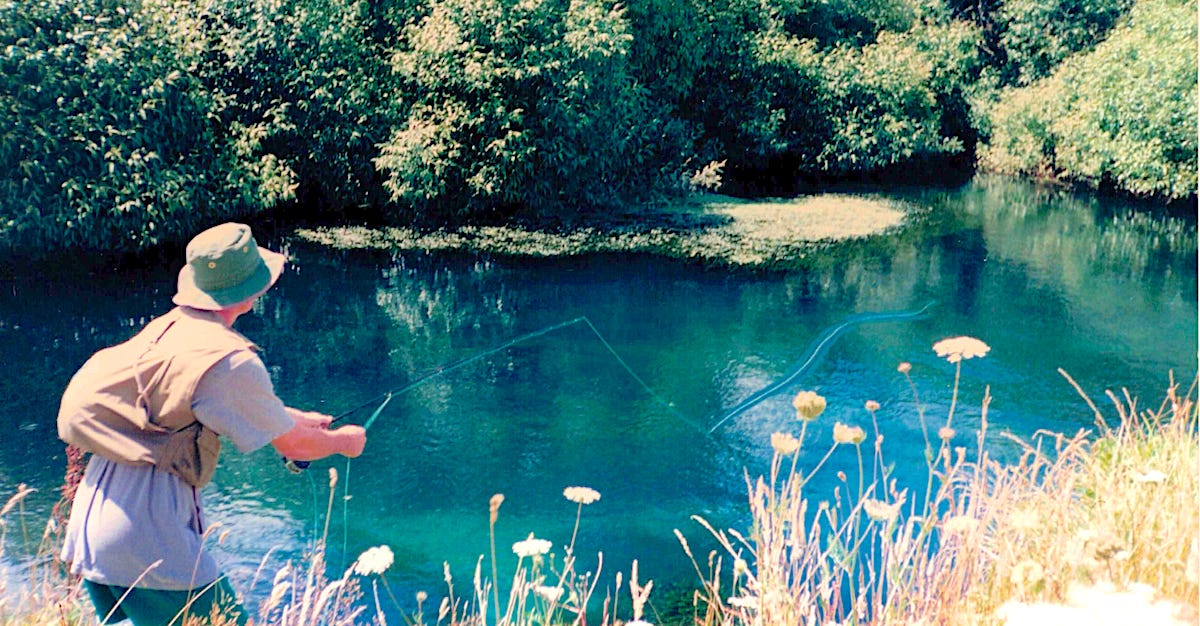
It was only ten minutes of fast biking from my childhood home – a spring creek that meandered its way through farmland crops and sheep paddocks before wrapping around the town, its protective stop bank dividing urban from rural.
Riverside willows added further cocooning, so that the stream could have been a hundred miles away from anywhere. Well, that was where my head was whenever I visited this water.
I learned to properly cast a fly in these deep, mysterious, crystal-clear pools. For the first year, I spooked far more fish than I fooled. The first catch is etched indelibly into my memory: a #12 Dad’s Favorite dry, cast right across the river, accounting for a 2½-pound brown trout that showed far more patience than I deserved. I took it home to brag, of course.
I remember, years earlier, seeing my first trout in a local stream. A young, skinny, energetic child, I was clambering up a willow limb overhanging a clear green stream when a chunky, beautifully speckled brown trout cruised directly under my tree. It was likely searching for willow grubs dropping onto the water surface from the summer canopy. I saw the fish and marvelled. It saw me and took off. Thus started a repetitive pattern of engagement that has continued for over forty years.
The Lowland Spring Creeks
In hindsight, these world-class lowland, spring-fed creeks weren’t the easiest place for a newcomer to the sport to cut his teeth on. Luckily, I didn’t know that at the time. So I hoovered up everything I could read about entomology, trout behavior, fly tying, casting, and small-stream stalking (trout hunting is a more apt term) – all so I could better the odds against these stunningly spotted beauties, a short bike ride away.
My teenage years were invested in riverside camps with loyal mates, cycling tens of kilometres every weekend, over-consumption of angling magazines (and cheap flagons of beer served to us from the back door of the local public bar). Summers filled with fly fishing that kept me out of trouble. Mostly.
My first fly rod was a Kiwi-made Kilwell, manufactured from fibreglass and 8’6” in length. Colored orange, it was a magic wand that I spent hours learning to cast – steeple, curve, roll (as best you can without water tension) – in my front yard, skimming between power lines and fruit trees. It may have been called a Striker, but I can’t be sure.
I foolishly sold it to a local angler – the dad of a school friend – after receiving the Christmas gift of a Wynrod Heritage, an early boron graphite rod made in New Zealand. It proved stiff and lifeless, unlike my first love (yes, the orange rod!).
In recent years, I’ve scoured the internet seeking to find and purchase an old example of the same brand and hue as that majestic orange fly rod. Like heroes you should never meet, I suspect finding and casting one would lead to disappointment. Despite that, my search continues.
When I was fifteen, I guided a builder from British Columbia on my favorite local spring creek, situated a little further out of town. I met him at his car by the river after a solid thirty-minute ride on my bike – flushed and breathless.
We picked up some mighty fish that day, the best being 6.5 lb, hooked from an undercut bank on our side of the pool, only meters from where we stood. Every fish was dutifully weighed before being returned. His remark as we packed rods at the end of the day made a big impression:
“I build for six months in Canada and come here to fish for the other six months. I’ve done this for years, and I can tell you that this river is, by far, the best in New Zealand.”
I must have been obsessive, as I still have notes on every fish caught over those childhood years – the fly used, even their Condition Factor, calculated spuriously from length and weight.
My first stillwater trout was a 4.5 lb beauty, caught in the local dam behind town (now a shadow of its former self). This relative behemoth took a Creedons Creeper dragonfly nymph created by the late Al Creedon of Christchurch, New Zealand.
Frequent after-school sessions, and spring, summer, and autumn weekends right through my teenage years, were spent exploring these lowland spring creeks.
Evenings were dutifully invested in poring over Trout Stream Insects of New Zealand by Norman Marsh, or the many tomes written by Tony Orman and other New Zealand authors that listed indigenous fly patterns and how to tie them.
After each session, if I was fishing alone, I’d ring around my friends to report in detail on each successful catch – and the near-misses. We had names for every fish in every pool in these streams. They would do likewise, broadcasting their wins and losses. Mostly we fished together – two, often four of us – taking turns to outwit these wary trout.
Flying the Coop
As we got older, the trips involved family cars, parents’ company cars, and tramps deeper into the region’s valleys.
And after university, when wages started to come in, aerial transport – combined with Shanks pony – got us into some very special wilderness country.
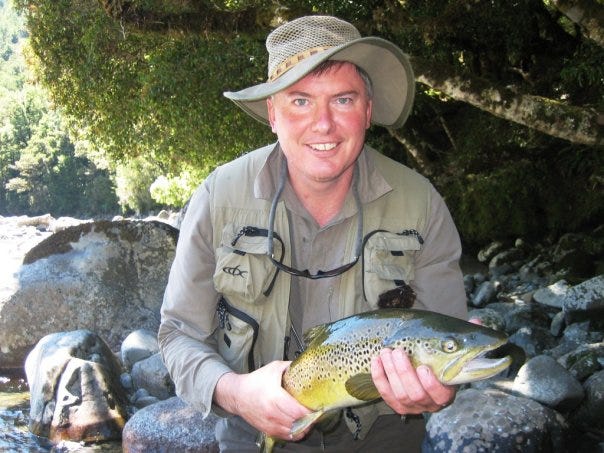
Since those halcyon teenage years, I’ve walked, climbed, and flown by helicopter and fixed-wing aircraft into many corners of New Zealand’s North and South Island backcountry – both hunting deer and trout fishing. I’ve undertaken winter pilgrimages to Taupō and Rotorua, and explored the back of beyond on both islands over endless springs, summers, and autumns. I’ve tramped, swum, or floated out of many wilderness rivers after days of isolated camping, searching around the next bend for new water and the promise of more large, wary trout to pursue.
Without those lowland spring creeks – and my trusty orange Kilwell – life would most certainly have headed in an entirely different direction.